The Complete Technical SEO Audit Checklist for Malaysian Websites
A comprehensive technical SEO audit checklist tailored for Malaysian websites. Covers crawlability, indexation, Core Web Vitals, mobile performance, and international SEO considerations.

We see many homeowners and business owners pour resources into brilliant content, only to watch it vanish in search rankings. You know the frustration of a beautiful site that Google simply ignores.
Our professional service team created The Complete Technical SEO Audit Checklist for Malaysian Websites after spending 22 years auditing local domains.
Generic international guides completely miss the realities of hosting locally and handling multilingual audiences. We will break down exactly what your site needs, whether you handle it internally or review the work of an SEO agency. The data shows exactly where these failures occur, and the following steps provide the exact solutions.
1. Crawlability and Indexation
We always begin technical audits by verifying that search engines can actually access your content. A single misconfigured directive easily destroys months of organic traffic.
Our team frequently encounters local businesses losing visibility because of basic server rules. Many popular Malaysian hosts use aggressive ModSecurity firewall settings that accidentally block legitimate bots.
Robots.txt Review
We instruct clients to check the file at yourdomain.com/robots.txt first. Common mistakes include blocking the /wp-content/uploads/ directory to prevent image indexing.
Our engineers also see staging subdomains pushed to production with blocking rules still attached. Ensuring this file references your XML sitemap provides a critical signal that developers often miss.
- Verify
/wp-admin/is strictly blocked but/wp-content/is completely open. - Confirm the sitemap URL is clearly declared at the bottom of the file.
- Test the file using the Google Search Console validation tool.
XML Sitemap Validation
We require dynamically generated sitemaps that reflect current site conditions. Validating the following elements prevents major crawling bottlenecks:
- All important service pages are present.
- No 404 or redirected URLs appear.
- The
lastmoddates update correctly. - Sitemaps are split logically for larger e-commerce stores.
Indexation Status
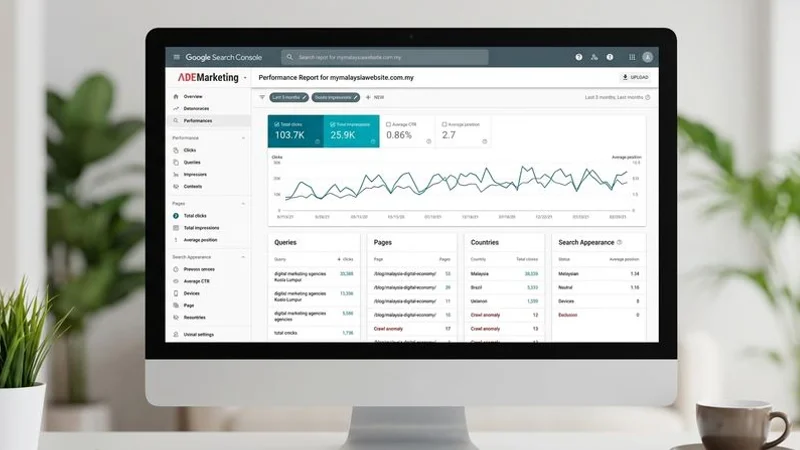
We use the site:yourdomain.com search operator to get a rough page count. Comparing this against your expected count reveals major discrepancies immediately.
Our audits often reveal that firewall barriers on local shared hosting prevent Google from fetching pages. Too few indexed pages suggest these server-level barriers, while too many indicate parameter-based bloat.
2. Site Architecture and URL Structure
We structure URLs carefully because they act as both ranking signals and usability factors. Clean paths make navigation simple for users browsing your property listings or store items.
Our guidelines for bilingual audiences require specific formatting choices. Using subdirectories like /ms-MY/ for Malay content performs better than using separate subdomains.
We enforce these specific best practices at ADE Marketing to maintain consistency. The table below outlines clear structural rules.
| Factor | Recommended Practice | Practice to Avoid |
|---|---|---|
| Word Separation | Hyphens (house-cleaning) | Underscores (house_cleaning) |
| Bilingual Setup | Subdirectories (/ms-MY/) | Subdomains (ms.domain.com) |
| URL Length | Under 75 characters | Long dynamic parameters |
Internal Linking Architecture
We map your site structure to ensure every important service page is reachable within three clicks from the homepage. Deeply buried content struggles to rank effectively.
Our technical audits actively search for orphan pages that lack pointing internal links. These isolated pages remain completely invisible to search engines and potential customers.
We highly recommend using tools like Screaming Frog for this deep crawl analysis. You can start by checking the Google Search Console coverage report to spot discovered but unindexed URLs.
Canonical Tags
We verify that every single page contains a self-referencing canonical tag. These tags must point to the exact correct version of the URL.
Our audits frequently catch canonical conflicts on e-commerce platforms like WooCommerce. Choosing one consistent format prevents duplicate content penalties entirely.
3. Core Web Vitals and Page Speed
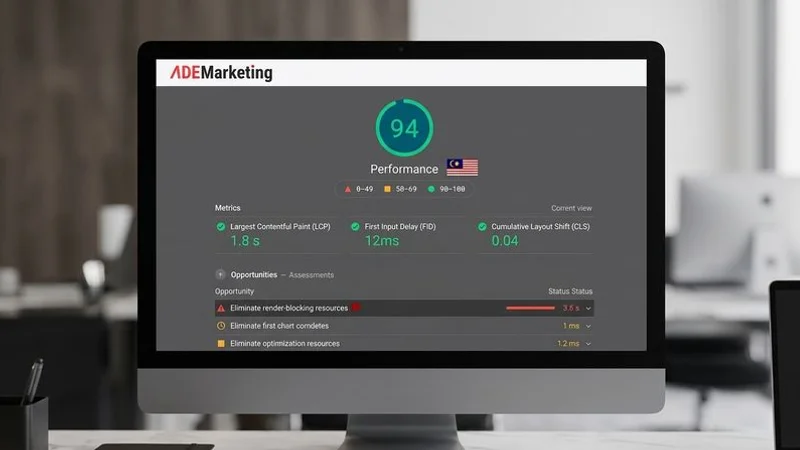
We prioritize Core Web Vitals because Google uses these metrics to measure real user experience. Recent 2026 data shows only 32 percent of WordPress sites pass Time to First Byte tests on mobile.
Our analysis reveals this happens primarily because local businesses rely on cheap shared hosting without edge caching. Upgrading to a dedicated VPS or using platforms with Singapore data centers solves this immediately.
Largest Contentful Paint (LCP)
We target an LCP time of under 2.5 seconds for all client sites. Common culprits in the local market include oversized hero images lacking modern WebP format compression.
Our developers consistently find render-blocking CSS and JavaScript in the document head. Slow server response times from international providers severely delay this visual rendering.
- Compress all hero images using WebP formats.
- Defer non-critical CSS files.
- Move to local or regional SSD hosting.
Cumulative Layout Shift (CLS)
We ensure visual stability by keeping the CLS score strictly under 0.1. Dynamically loaded promotional banners on WooCommerce stores frequently ruin this metric.
Our testing isolates web fonts that cause text reflows during the loading sequence. Explicitly declaring image width and height attributes prevents the page from jumping around.
Interaction to Next Paint (INP)
We test interactive elements like dropdowns and filters to keep the INP under 200 milliseconds. Heavy JavaScript frameworks without proper code-splitting frequently cause INP failures.
Our optimization process delays non-essential scripts until after the user interacts. Shoppers abandon carts quickly when buttons fail to respond instantly.
4. Mobile Performance
We optimize heavily for smartphones because Malaysia boasts over 90 percent mobile internet penetration in 2026. The average mobile website load time still sits around 8.6 seconds globally according to Hubspot data.
Our goal is to bring your mobile loading times well under three seconds to prevent high bounce rates. Heavy payment gateway integrations like FPX often drag down these mobile checkouts.
Mobile Rendering and Viewport Configuration
We manually test pages on mid-range Android devices, which represent the bulk of the local market. Relying solely on high-end iPhones provides an inaccurate picture of daily performance.
Our technical checklist includes verifying proper viewport meta tag configuration. Content extending beyond the screen width creates frustrating horizontal scrolling issues.
Touch Target Sizing
We require all interactive elements to have a minimum 48x48 pixel tap target. Bilingual navigation menus often fail this standard by cramming too many items into tight spaces.
Our designers ensure adequate spacing between buttons to prevent accidental clicks. A smooth and error-free mobile experience directly increases booking requests and sales.
5. Security and HTTPS
We run strict security checks to build user trust and satisfy ranking algorithms. Mixed content warnings immediately scare off potential buyers during checkout.
SSL Certificates and Proper Redirects
We verify that your SSL certificate is active, valid, and set to auto-renew. Serving any images or scripts over insecure HTTP connections triggers immediate browser warnings.
Our configuration process ensures every HTTP request forces a 301 redirect to the secure version. Testing variations with and without the standard prefix confirms everything resolves correctly to a single secure URL.
- Check SSL expiration dates quarterly.
- Scan the database for hardcoded HTTP image links.
- Verify 301 redirects act as permanent signals.
6. Structured Data and Schema Markup
We implement structured data to help search engines understand the exact context of your business. This code enables rich results that dramatically improve click-through rates from search pages.
Our preferred implementation strategy focuses on highly specific local identifiers. Including your SSM (Suruhanjaya Syarikat Malaysia) registration number in your LocalBusiness markup builds massive regional trust.
Essential Schema Types
We deploy several crucial markup formats to maximize visibility. The following schema categories provide the best return on investment:
- LocalBusiness: Include your physical address, operating hours, and +60 phone format alongside your SSM number.
- FAQPage: Target featured snippets on service and pricing pages.
- Article: Apply this to all blog content with correct authorship dates.
- BreadcrumbList: Match the visible site navigation to help crawlers understand the page hierarchy.
Validation and Testing
We run every updated page through the Google Rich Results Test tool. Checking the official Schema.org validator catches hidden syntax errors.
Our team treats warnings just as seriously as full errors. Fixing these minor warnings often unlocks richer and more prominent search appearances.
7. International and Multilingual Considerations
We frequently configure sites to serve English, Bahasa Malaysia, and Mandarin content seamlessly. Proper international search settings direct the right language version to the right customer.
Hreflang Tags and Translation Quality
We enforce strict formatting for regional tags to prevent indexing confusion. Using plain ms instead of the specific ms-MY or en-MY fails to specify the exact target region.
Our content teams manually review translated pages to guarantee quality and natural phrasing. Google actively flags machine-generated translations as low-value spam.
| Language Target | Incorrect Tag | Correct Tag |
|---|---|---|
| Malaysian English | en | en-MY |
| Bahasa Malaysia | ms | ms-MY |
| Simplified Chinese | zh | zh-MY |
8. AI Readiness Checks
We now assess your setup for generative engine optimisation as AI tools change search habits. These new systems require specific structures to summarize your business accurately.
Our developers implement an llms.txt file to feed clean data directly to AI crawlers. This emerging standard ensures large language models process your facts correctly.
Structured Content Architecture
We organize information logically so AI systems extract facts easily. Clear headings, bullet points, and factual statements work best for machine reading.
Our writers cite specific sources and build detailed definition lists to establish authority. Well-organized FAQ sections feed directly into generative engine summaries.
- Use clear definition lists for industry terms.
- Cite specific regulatory bodies or pricing statistics.
- Maintain short and highly factual answers in FAQ sections.
Executing The Complete Technical SEO Audit Checklist for Malaysian Websites
We conduct these thorough technical assessments quarterly for optimal performance. Continuous monitoring catches issues that automated crawlers completely miss.
Our engineers recommend focusing on these primary metrics:
- Core Web Vitals mobile scores.
- Indexation coverage errors.
- SSL certificate validity.
We know that a flawless technical foundation separates the top ranking sites from the invisible ones. Fixing these speed and structural factors directly improves Quality Scores for SEM campaigns.
Our team is ready to help you implement these exact fixes. Using The Complete Technical SEO Audit Checklist for Malaysian Websites secures your broader search marketing strategy and drives serious revenue.